
Most owners find out the hard way that opening a second location and growing a business are not the same thing. One adds a city to the map. The other adds revenue the company didn't have before, without quietly draining the revenue it already earns.
The dividing line is a single threshold: the monthly revenue a new branch has to clear before it stops needing the owner's help to survive. Below that threshold, every slow month becomes a wire transfer out of the owner's own pocket. Above it, the branch pays for itself. Foster (not his real name), who runs a foundation repair and concrete leveling company, is about to find out which side of that line his second and third locations land on, and how much of the readiness work has to happen before either one opens.
Most owners find out the hard way that opening a second location and growing a business are not the same thing. One adds a city to the map. The other adds revenue the company didn't have before, without quietly draining the revenue it already earns.
The dividing line is a single threshold: the monthly revenue a new branch has to clear before it stops needing the owner's help to survive. Below that threshold, every slow month becomes a wire transfer out of the owner's own pocket. Above it, the branch pays for itself. Foster (not his real name), who runs a foundation repair and concrete leveling company, is about to find out which side of that line his second and third locations land on, and how much of the readiness work has to happen before either one opens.
Foster spent half a day driving three hours round trip to re-verify a Google Business Profile in a city outside his home market. He'd filmed the whole building directory except the company name; the listing got suspended, and nobody else could send it. "It's just right now, there ain't nobody to pass it off to, because everybody else is slammed, so it's [Foster's] plate," he said.
Behind the video is a bigger gap: no documented process for a task the company will need dozens of times over. One owner driving six hours to fix a single listing is a rough afternoon. The same gap, repeated across two or three expansion cities, turns into a structural bottleneck, with the highest-paid person in the company stuck doing its lowest-leverage work.
A new location doesn't have to be profitable on day one. It has to be on a credible path to a specific revenue target: roughly $83,000 a month, or about $1 million a year. Below that, the branch can't cover its own overhead, and the shortfall comes from somewhere. Above it, the math starts working without help.
Stuart Trier put the risk in blunt terms:
"Anything below it, something goes wrong, and the Bank of [Foster] will fund it, but you really don't want to be the Bank of [Foster] in five different locations. You really want it above a million dollars." — Stuart Trier.
That's the actual test for expansion readiness: can this specific city clear $83,000 a month before the owner runs out of patience or cash funding it personally.
Before committing to a second city, Foster's leadership team sat down and mapped out how the business would run remotely: production scheduling, payment collection, day-to-day accounting. By his own estimate, they'd covered roughly 60% of what they'd need. The other 40% was still an open question.
Sixty percent of a remote operating plan means the missing 40% is exactly where things go wrong first, usually collections. A crew four hours from the home office with no documented sign-off or invoicing process finishes jobs nobody gets paid for on time. That other 40% needs to be finished before the first remote crew is on the ground, not patched together once jobs are already underway.
Foster's team is actively building corporate-only credit: lines that don't require him to guarantee a company truck lease or a materials purchase personally. It sounds like a paperwork exercise, but it's one of the more direct ways a growing business separates the owner's personal financial exposure from the company's.
The concept is simple. The execution is where it gets hard. Getting Dun & Bradstreet, Experian, and Equifax profiles to match exactly, then building a track record with reporting trade vendors before qualifying for meaningful credit lines, takes months of deliberate work, not a form filled out once. Foster is running it in parallel with everything else, which is the right sequencing: corporate credit takes time to build, so it has to start well before the second location needs it.
The expansion plan calls for one remote salesperson to generate the pipeline that keeps a new branch's crews working. If that person leaves, gets injured, or simply doesn't work out, the branch's entire pipeline stops until someone new is hired and trained. Stuart Trier named the risk directly: "You might have a great sales rep... If he leaves, you're in a loop, and you've got to start again... It's like a single point of failure until it creates."
The structural response was to hire two reps at once instead of one. It costs more upfront and buys real redundancy. If one leaves, the branch doesn't reset to zero; it just runs lighter for a while. Relying on one person this heavily means one person's continued employment determines whether an entire city's revenue keeps flowing.
Right now, every city Foster's company operates in, the home market plus every future expansion, sits under one corporate entity. That means a lawsuit from an accident in a city four hours from headquarters could reach the trucks, bank accounts, and operations of the location that has nothing to do with it. Stuart Trier was direct about why that matters: "If something happened [in an expansion city], you don't want it to bring down everything. You want to compartmentalize it."
The structural fix is a holding company at the top, with each city operating underneath as its own legal entity, and the vehicles and equipment held separately and leased to each location. Setting it up runs somewhere between $10,000 and $15,000 in legal fees: a real cost, but a small one next to what a single uncompartmentalized accident could expose. More cities without this structure in place means more risk sitting in the same basket as everything else the company owns.
| Reactive expansion | An installed Profit Engine |
|---|---|
| Warehousing and staging get figured out "when the time comes" | Local staging is secured before local marketing turns on |
| Startup cost is a rough guess, not a modeled range | Startup capital is modeled with a sensitivity buffer for slow ramp-up |
| A single remote sales rep carries the entire branch pipeline | Two reps are hired together, building redundancy from day one |
| Every city sits under one legal entity | Each city is compartmentalized, with liability isolated by location |
| The owner personally subsidizes underperforming branches indefinitely | A $1 million run-rate threshold determines which branches stand on their own |
Foster's team is generating leads and setting up local business listings in expansion cities before they've secured anywhere to store materials or stage crews locally. This week, it's a foundation repair issue. The same gap shows up in almost any trade that has to bring equipment to the job.
An HVAC contractor expanding into a second city runs into the same gap: techs are hired locally, but no shop or storage unit is secured yet, so they drive back to the home office twice a week to load condensers and line sets before every job. The lost time is the same either way: hours of billable labor spent on logistics that a $500-a-month storage unit would have eliminated, plus equipment sitting exposed overnight instead of locked up—the trade changes. The sequencing mistake, generating demand before securing the physical footprint to fulfill it, stays the same.
Clear Results' The Revenue Lie: Why Your $3M Target Is Worthless Without a Profit Number playbook addresses this directly: "Growth without a profit target just builds a bigger cost machine. Fix the profit math first." A second location without a real profit number just builds a bigger version of the same cost problem.
The same playbook makes the underlying point even sharper: "Revenue is the output. Profit is the input." Generating leads without generating profit in a new city just produces a more expensive version of standing still.
A useful benchmark is roughly $83,000 in monthly production, or about $1 million annualized. Below that threshold, a location typically can't cover its own overhead from its own revenue, which means the shortfall has to come from somewhere, usually the owner's personal funds or the parent location's cash flow. Above it, the math starts working on its own, without ongoing intervention. The exact number will vary by trade and market, but it's a concrete target to model against instead of expanding on hope alone.
At minimum, it needs documented processes for production scheduling, quality checkpoints, payment collection, and accounting, including how work gets signed off and invoiced when the owner or office isn't physically present to catch mistakes. A plan that's mostly built but still has real gaps, especially around collections, tends to fail exactly where the gaps are once the pressure of a live launch hits—finishing the plan before opening costs less than fixing it while a branch is already bleeding cash.
It starts with matching the company's information exactly across the major business credit bureaus, then transacting consistently with vendors that report payment history to build a track record. This process typically takes several months of deliberate activity, not a single application. The payoff is real: a company that can finance vehicles and materials on its own credit profile stops requiring the owner to personally guarantee every new piece of equipment or every new location's overhead.
Because the entire branch's pipeline depends on one person continuing to perform and stay employed. If that person leaves, gets injured, or underperforms, the location's sales function stops rather than just slowing down, and the business has to restart the hiring and training process from scratch. Hiring two salespeople at the same time costs more upfront but creates redundancy: if one leaves, the other keeps the pipeline moving while a replacement gets trained.
For a business operating in more than one city, compartmentalizing each location into its own operating entity under a shared holding structure is a common way to limit liability. Without it, a serious incident at any one location, particularly involving a vehicle, can expose the bank accounts, equipment, and operations of every other location under the same corporate entity. Setting up this kind of structure typically costs $10,000 to $15,000 in legal fees, which is a modest cost relative to the exposure it removes.
Home service coaching engagements like Clear Results' typically shift expansion decisions from instinct to a modeled process: a specific revenue threshold to hit, a documented operating plan to complete, and a legal structure in place before a new location opens, not after something goes wrong. The value comes from the discipline of running every expansion decision through the same checklist, instead of treating each new city as its own one-off judgment call.
This piece is based on a real Clear Results advisory conversation. Some details have been adjusted to protect client confidentiality.
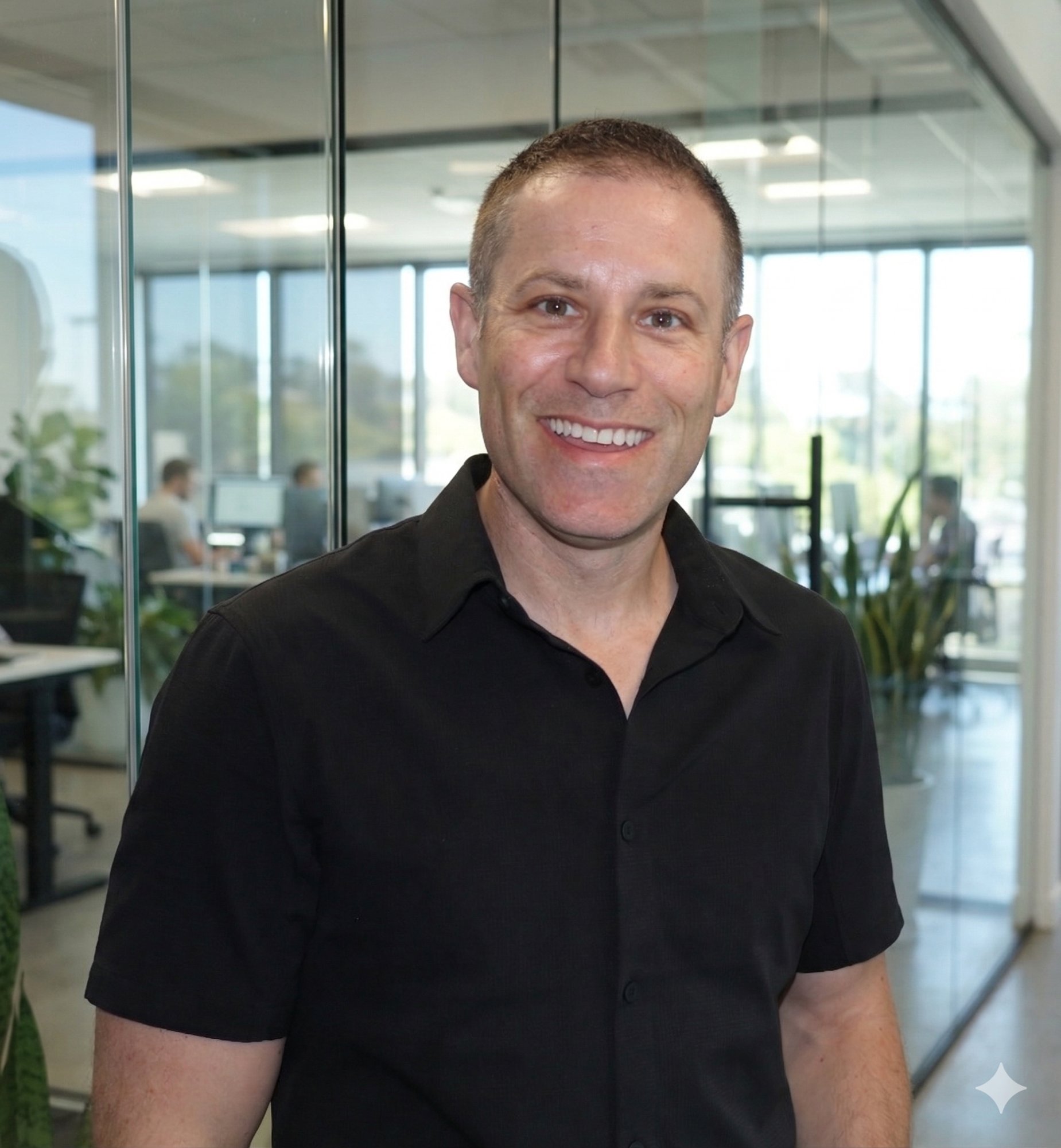
Stuart Trier is the Founder and CEO of Clear Results. Over the past 20 years, Stuart has built, bought, and sold 11 companies across the home service, healthcare, and marketing industries. He built his first company from startup to $8M in revenue in 3 years before a successful exit, then built a chain of 28 healthcare clinics and sold the business to a publicly traded company. Following that acquisition, Stuart spent 3 years working alongside the CEO, helping lead the organization through a take-private transaction before participating in a nine-figure exit to a Fortune 10 company. Today, he's the lead investor behind an electrical services platform operating across 3 U.S. states, and has worked directly with owners through 1,800+ strategic advisory sessions.
A prospective partner in a new market said no to a majority-stake offer for one simple reason: no numbers to back it up. About 8 weeks later, the same owner closed a 75/25 partnership on a different location, once he had a track record instead of a reputation.
Owners expanding into a second market usually budget for a lease and a marketing spend, then get blindsided by the one-time costs that hit before a single job closes. One owner's real cash-flow model shows exactly where that shortfall lands, and what it costs to ignore it.
Funding a second location means building a working capital reserve, sequencing new hires against revenue, and structuring equity for key leaders through a separate holding company. See how one home service owner nearly drained $120,000 from his retirement account, tax penalty included, before finding a different way to capitalize the launch, and the sequence that protected his cash.
A waterproofing and foundation repair company talked about non-weather-dependent revenue streams for 2 years without launching one, then logged its worst December on record. A single $50,000 job could have offset the entire seasonal dry spell, if the plan had ever left the meeting room.
